
Animal welfare education
Feeding Street Dogs Responsibly: Clean Bowls, Safer Spaces
A practical approach to nutrition, water, cleanliness and considerate community feeding.
Prepared for Animora Foundation · Edition: 18 October 2026 · Independent veterinary/legal review pending.
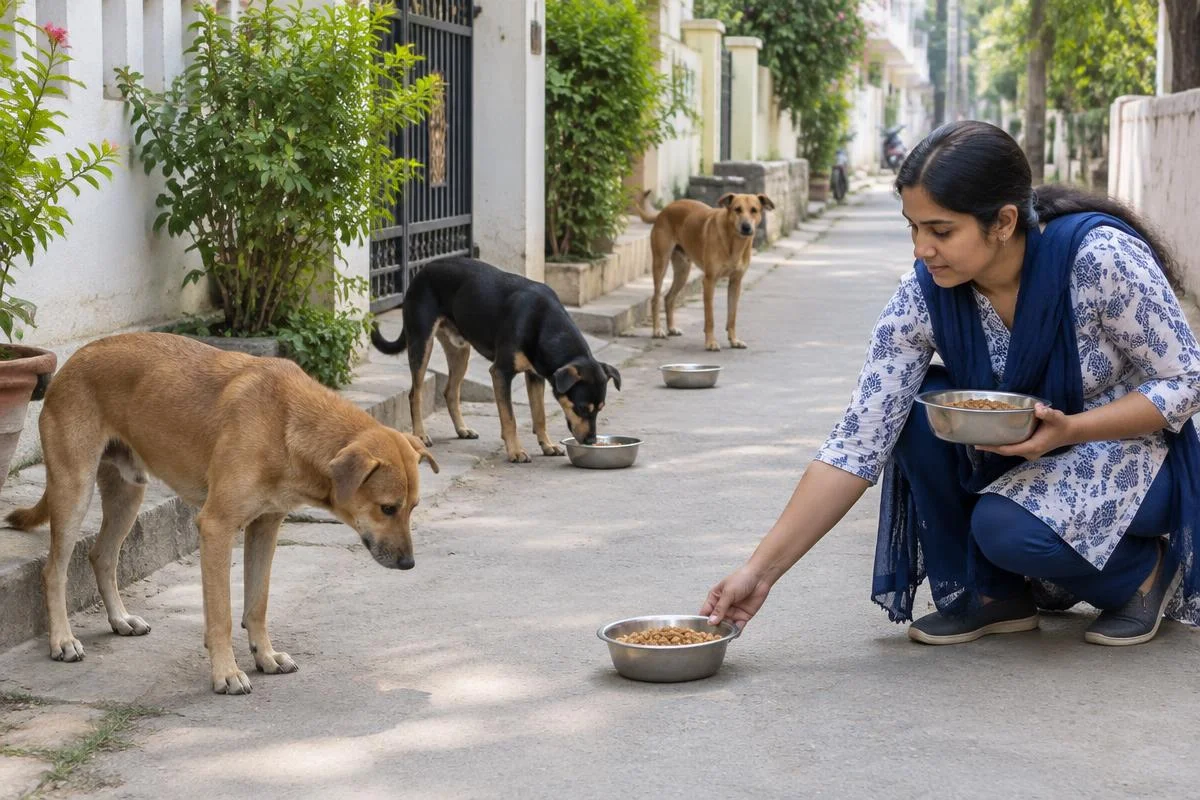
AI-generated cover, not a photograph of an Animora Foundation case.
Plan before setting down a bowl
Speak with local carers and follow applicable local-authority arrangements for feeding areas. Choose a place that does not obstruct pedestrians or traffic and avoid creating conflict at entrances, play areas or other sensitive spaces. Court directions and local arrangements can affect where feeding is permitted; check the current position for your area.
Keep a predictable, manageable routine and watch from a respectful distance. Separate bowls can reduce crowding, especially around puppies, older dogs and dogs with different dietary needs. Do not reach between dogs competing over food.
Food and water deserve care
Offer fresh food appropriate to dogs, not spoiled leftovers or food containing known hazards such as chocolate, grapes, raisins or xylitol. Avoid sharp bones and packaging. A veterinarian should guide diets for puppies, pregnant animals, sick dogs and animals with specific nutritional needs.
Use clean bowls and provide fresh drinking water. Do not assume a full stomach proves a balanced diet or that one feeding plan suits every animal. Check with a veterinary professional before giving supplements or making major dietary changes.
Leave the space better than you found it
Collect uneaten food and packaging and wash containers. Avoid leaving food that attracts pests or creates slippery paths. Carry waste away responsibly and keep water vessels from becoming stagnant. Good feeding practice respects neighbours and public-health concerns.
Record the date, general locality, food quantity and expenditure only when measured or supported. A photo is not a substitute for counting carefully; repeat visits to the same dogs are not a count of unique animals.
Misconception: a contribution buys an exact outcome
Suggested feeding contributions are not fixed care prices. Costs vary with diet, procurement, dog numbers and transport. Accountability means describing what was actually provided and retaining supporting records, not promising a precise result for every amount.
Official references & further reading
- Animal Welfare Board of India — official guidance and rules
- India Code — legislation
- Supreme Court of India — latest judgments and orders
Check the latest source materials and local requirements. This guide does not replace professional diagnosis, treatment, current court orders or legal advice.