
Animal welfare education
An Injured Dog: Observe Safely, Get Qualified Help
What you can do without making an injury or a dangerous situation worse.
Prepared for Animora Foundation · Edition: 18 October 2026 · Independent veterinary/legal review pending.
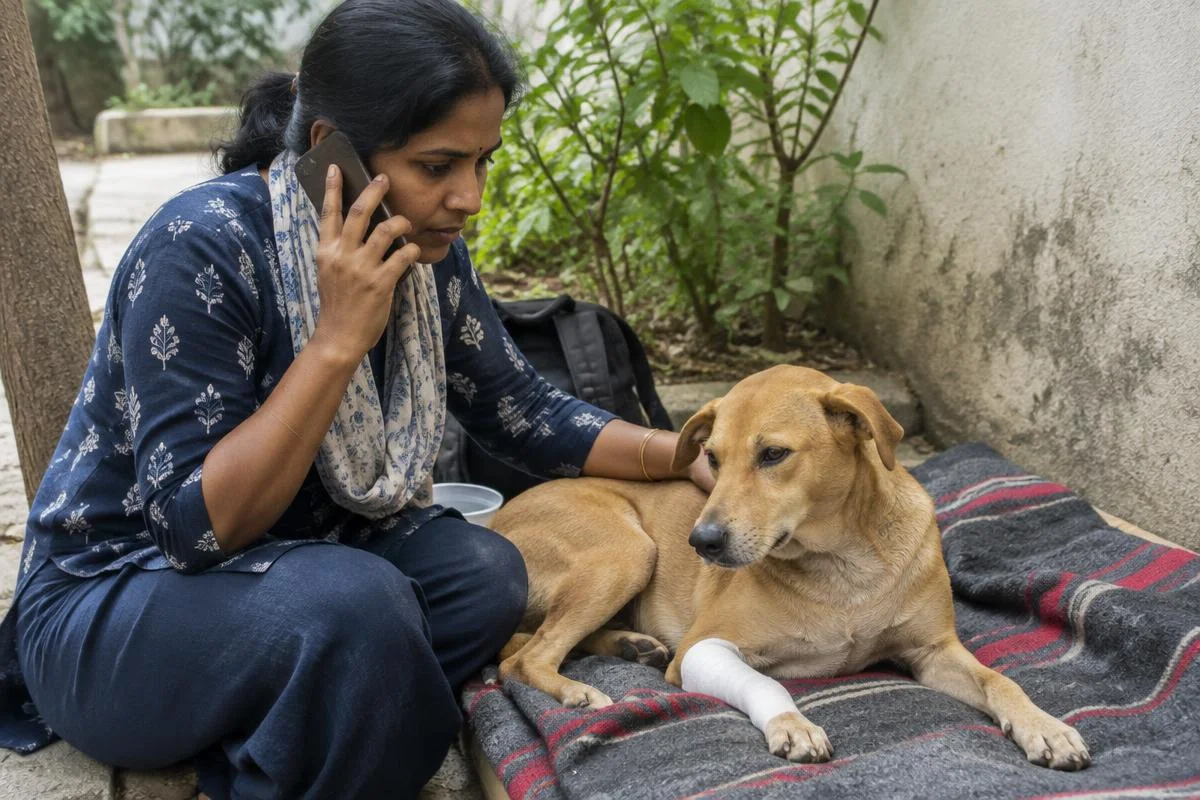
AI-generated cover, not a photograph of an Animora Foundation case.
First protect yourself and others
Stop at a safe distance and assess traffic, nearby people and the dog’s behaviour. Pain and fear can make even a familiar dog bite. Do not place yourself in traffic, corner the animal or involve children in handling. Ask others to keep space clear while qualified help is contacted.
Record the general location, visible condition and whether the animal can move. A short description and a safe-distance photograph can help responders assess urgency. Do not move closer just to obtain a better image or publish distressing images to pressure others.
Call before moving
Contact a local veterinary hospital, municipal animal-welfare service or recognised responder. Explain what you can see rather than diagnosing an injury. Ask whether they can receive the dog, what transport is suitable and whether trained handling help is available.
Untrained lifting can worsen a spinal injury or expose helpers to bites. Do not drag an animal by its legs, collar or tail. Transport should be planned with a professional, in a secure, ventilated arrangement that prevents escape and does not compress injuries.
Avoid improvised treatment
Do not give human pain medicines, sedatives or antibiotics. Do not force food or water into an injured or unresponsive dog’s mouth. A veterinarian must decide treatment, medication and safe handling. Keep the environment calm while waiting for instructions.
After a bite or possible rabies exposure, immediately wash the wound with soap and running water for 15 minutes and seek urgent medical assessment. Do not wait to see whether the animal becomes ill. A healthcare professional decides post-exposure treatment.
Follow through responsibly
Keep the responder’s details, case reference and agreed plan. Ask how updates can be shared without exposing sensitive locations. A request to Animora Foundation is reviewed for urgency, feasibility and capacity; it is not a promise of immediate rescue or a 24/7 service.
Official references & further reading
- Animal Welfare Board of India — official guidance and rules
- India Code — legislation
- National Rabies Control Programme
Check the latest source materials and local requirements. This guide does not replace professional diagnosis, treatment, current court orders or legal advice.