
Animal welfare education
Vulnerable Puppies: Warmth, Assessment and Responsible Intervention
Help carefully without separating a litter unnecessarily or improvising medical care.
Prepared for Animora Foundation · Edition: 18 October 2026 · Independent veterinary/legal review pending.
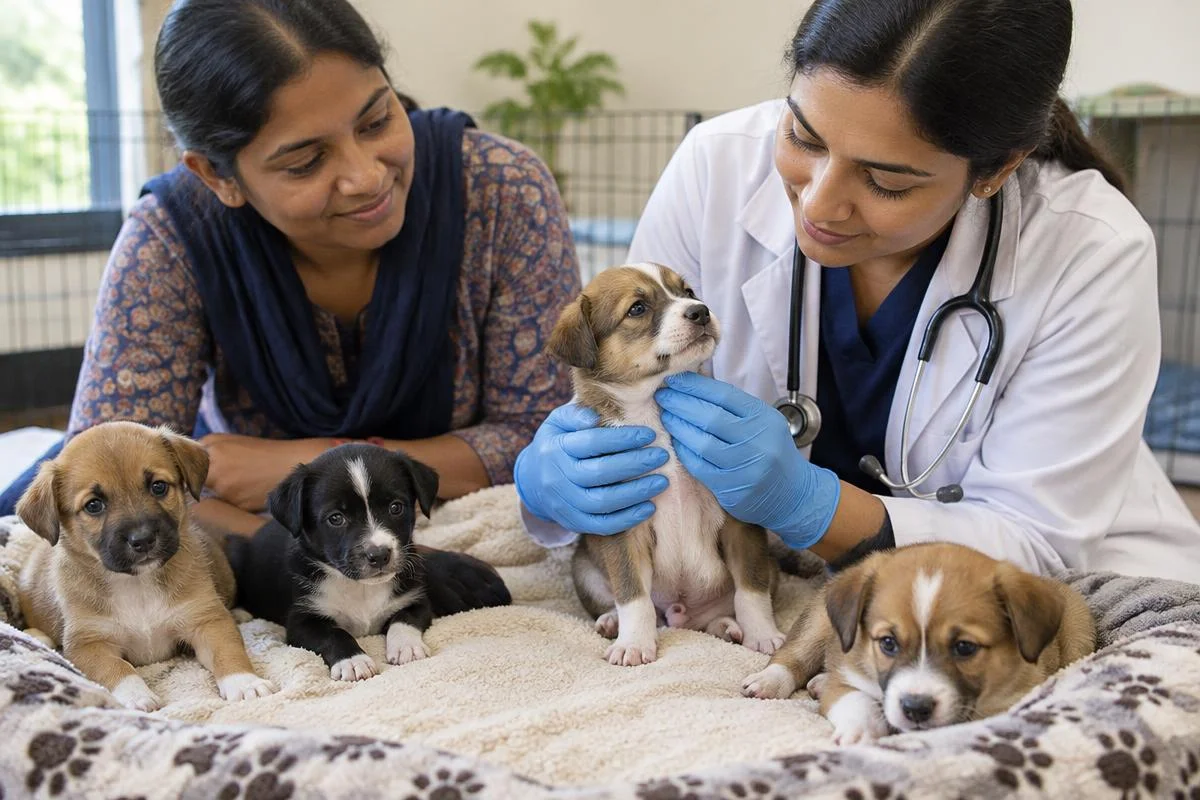
AI-generated cover, not a photograph of an Animora Foundation case.
Observe before intervening
A litter may have a mother nearby who is temporarily away. Watch from a safe distance and ask local carers before deciding the puppies are abandoned. If the site poses immediate danger, seek advice from a veterinary professional or recognised responder about a safer intervention.
Do not crowd the mother, handle puppies for photographs or move a litter simply because its presence is inconvenient. Age, condition, maternal care and environmental risk all affect the appropriate response.
Clinical advice comes first
Very young puppies are vulnerable to temperature changes, dehydration and infection. A veterinarian should assess their condition and advise on warmth, feeding and disease prevention. Do not provide homemade medical regimens or assume cow’s milk is a suitable replacement feed.
Avoid force-feeding or giving liquids to a weak, unresponsive or struggling puppy. Incorrect feeding can cause harm. The appropriate product, quantity and technique depend on age and condition and should be demonstrated by a qualified professional.
Reduce avoidable risks
Keep handling gentle and limited, maintain clean bedding and separate sick animals as a veterinarian advises. Wash hands and avoid exposing unvaccinated puppies to unfamiliar dogs or contaminated areas. Veterinary guidance is essential for vaccination and parasite care.
Safe transport needs a secure, ventilated container and professional advice on thermal comfort. Do not seal puppies in a box or leave them unattended in a vehicle.
A safe future needs a plan
Document veterinary care and arrange responsible placement when appropriate. Adoption requires suitability checks, honest health information and commitment beyond the puppy stage. Supporting humane sterilisation and responsible ownership helps address repeated abandonment without making unsupported claims about outcomes.
Official references & further reading
Check the latest source materials and local requirements. This guide does not replace professional diagnosis, treatment, current court orders or legal advice.